Queer Places:
Seccombe Family Cemetery, 71 Union Street, Peterborough, New Hampshire 03458
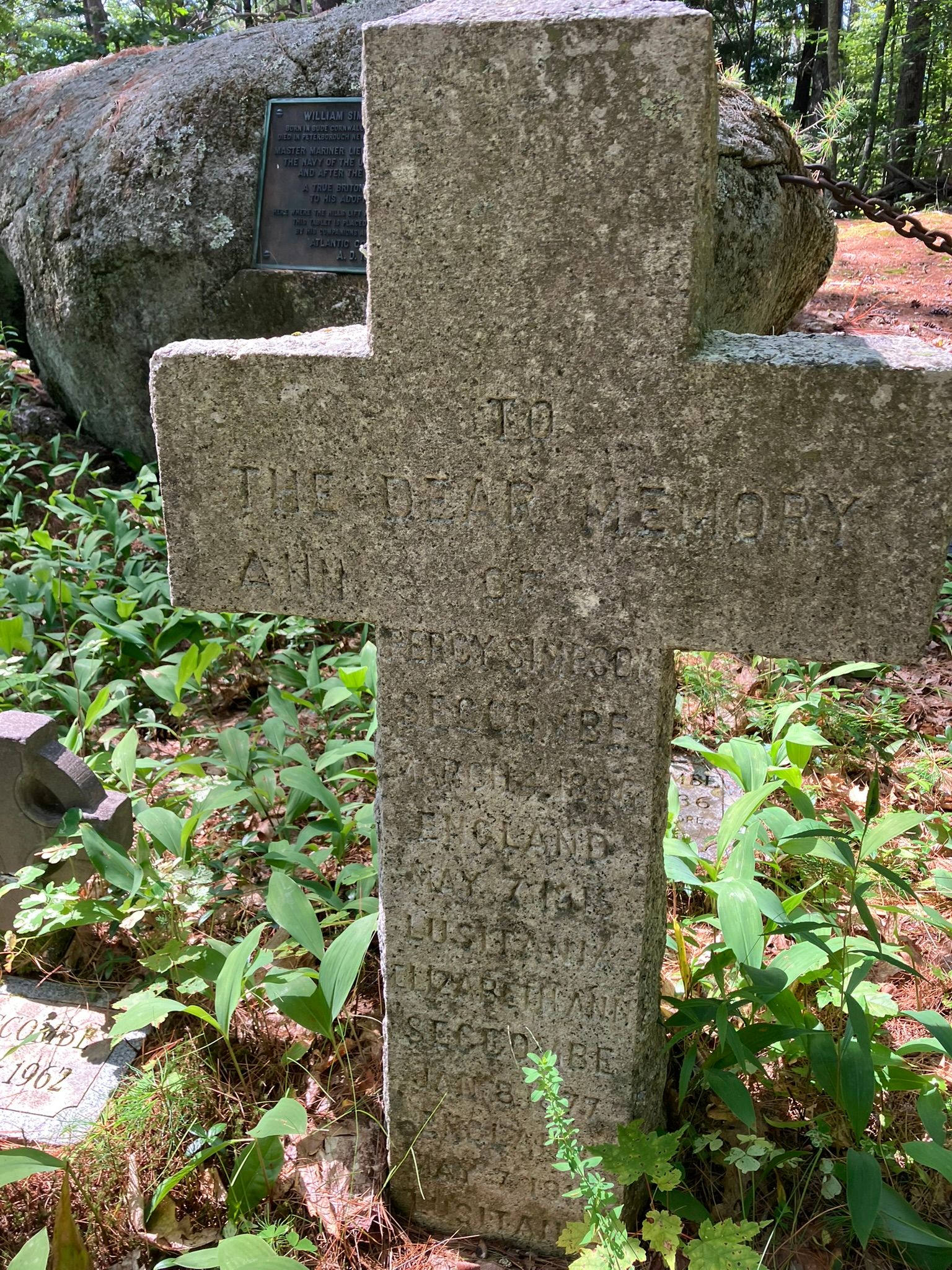 Elizabeth "Bessie" Ann Seccombe (January 8, 1877 - May 7, 1915) was born on January 8, 1877, in Northumberland, England, to William Simpson Seccombe, a
master mariner and Cunard Line captain, and his wife Hannah. As the second of eleven children in a large literary family, her early life was rooted in
England before her father emigrated to the United States in 1895. The family subsequently joined Captain Seccombe in 1897, settling in Peterborough, New
Hampshire, near the summer residences of Boston's prominent elite.
Elizabeth "Bessie" Ann Seccombe (January 8, 1877 - May 7, 1915) was born on January 8, 1877, in Northumberland, England, to William Simpson Seccombe, a
master mariner and Cunard Line captain, and his wife Hannah. As the second of eleven children in a large literary family, her early life was rooted in
England before her father emigrated to the United States in 1895. The family subsequently joined Captain Seccombe in 1897, settling in Peterborough, New
Hampshire, near the summer residences of Boston's prominent elite.
Well-read, highly educated, and independent, Bessie trained as a nurse, housekeeper, and secretary, eventually becoming a member of the Boston
Athenaeum. Around 1905, she entered into an intense romantic relationship with the American Imagist poet
Amy Lowell. The Lowell family likely established contact with the Seccombes through shared social circles in New
Hampshire or transatlantic maritime connections. The two women became virtually inseparable, traveling extensively together and receiving recognition as
a couple among mutual friends who entertained them and acted as confidantes. Historians view this partnership as pivotal to Lowell's career, as the
emotional stability and romance provided her with the confidence and drive to fully commit to her literary calling.
The primary evidence of their romance survives through letters preserved in the archives of Robert Grosvenor Valentine, a poetry professor, bond
trader, and government official who served as a trusted friend to both women. However, the relationship ended abruptly in 1907. The sudden breakup left
Bessie emotionally devastated, writing to the Valentines that "the bottom had dropped out of the universe" and expressing profound despair over Lowell's
refusal to see her again. Lowell was similarly shaken, later noting that she felt a loss of "spontaneity and freedom" following the separation.
Afterward, Lowell excised Bessie from her personal papers, causing Seccombe's role in the poet's life to be omitted from early historical accounts until
the recent discovery of the Valentine archival records.
Following the rupture, Bessie focused on supporting her household. After her father passed away in 1910, she stepped up as the primary breadwinner for
her mother and younger siblings, financing their education—including that of her youngest brother, Percy—through her varied professional work and earning
a membership as a primary financial pillar of the family.
Her life came to a tragic end during the First World War. On May 1, 1915, Bessie and Percy boarded the ocean liner RMS Lusitania as first-class
passengers in cabin B-35, intending to travel to England, where they planned to volunteer with the Red Cross. On May 7, 1915, the vessel was torpedoed by
a German submarine off the coast of Ireland. Both Bessie, aged 38, and Percy perished in the sinking. Her body, identified as recovered body number 164,
was initially slated for burial in Cobh, Ireland, before being repatriated to the United States aboard the SS Lapland for burial near her family's home
in Peterborough, New Hampshire.
References:
Other references:
- Robert Grosvenor Valentine Family Papers (Massachusetts Historical Society): Primary archival collection holding 32 letters and telegrams exchanged between Amy Lowell, Elizabeth "Bessie" Seccombe, and Robert and Sophie Valentine. These documents preserve the primary evidence of the romantic relationship between Lowell and Seccombe.
- Boston Athenaeum Archives: Records documenting Elizabeth Seccombe’s membership and reader profile at the institution.
- Amy Lowell Anew: A Biography by Carl Rollyson (Rowman & Littlefield, 2013): The first major biography to document and analyze the relationship between Amy Lowell and Bessie Seccombe, drawing on the newly surfaced Valentine family papers.
- An Unknown Love: The Letters of Amy Lowell and Elizabeth Seccombe (Massachusetts Historical Society, Object of the Month, November 2013): An essay detailing the discovery of Seccombe's correspondence, her role in Lowell's life, and the sudden end of their relationship in 1907.
- The Lusitania Resource – Passenger Profile for Miss Elizabeth Ann Seccombe: Detailed biographical, occupational, and passenger records, including details of ticket #1296, cabin B-35, and her recovery as body #164.
- Mixed Claims Commission Records (United States and Germany): Legal and financial claim filings regarding the casualties of the RMS Lusitania, documenting the employment, family support, and estate details for Elizabeth and Percy Seccombe.
- The New York Times Contemporary Passenger & Casualty Reports (May–June 1915): News dispatches covering the sinking of the RMS Lusitania, casualty lists, and the transport of recovered bodies aboard the SS Lapland.
- Peterborough Trail Guide & Local History (Peterborough Recreation Department, New Hampshire): Guides documenting the Seccombe Trail, land donated by the family, and historical markers honoring Captain William S. Seccombe and his children.
- Seccombe Family Cemetery & Old Church Cemetery Records (Peterborough, NH & Cobh, Ireland): Burial indices and headstone transcriptions for the Seccombe family plot and the initial interment lists at Queenstown (Cobh).
Support this project
This website is a passion project researched, developed, and funded entirely by me. If you find the content valuable and would like to help support the ongoing research and hosting costs, any contribution is deeply appreciated.
Thank you for keeping this independent resource alive!
My books on Amazon: Elisa Rolle's books
BACK TO HOME PAGE